


Browse Similar Items
TROILUS AND CRESSIDA, OR, TRUTH FOUND TOO LATE.
(London: Printed by I. Dawks, for Jacob Tonson, 1695). 222 x 170 mm. (8 3/4 x 6 3/4"). 12 p.l., 69, [1] pp. Third Edition.
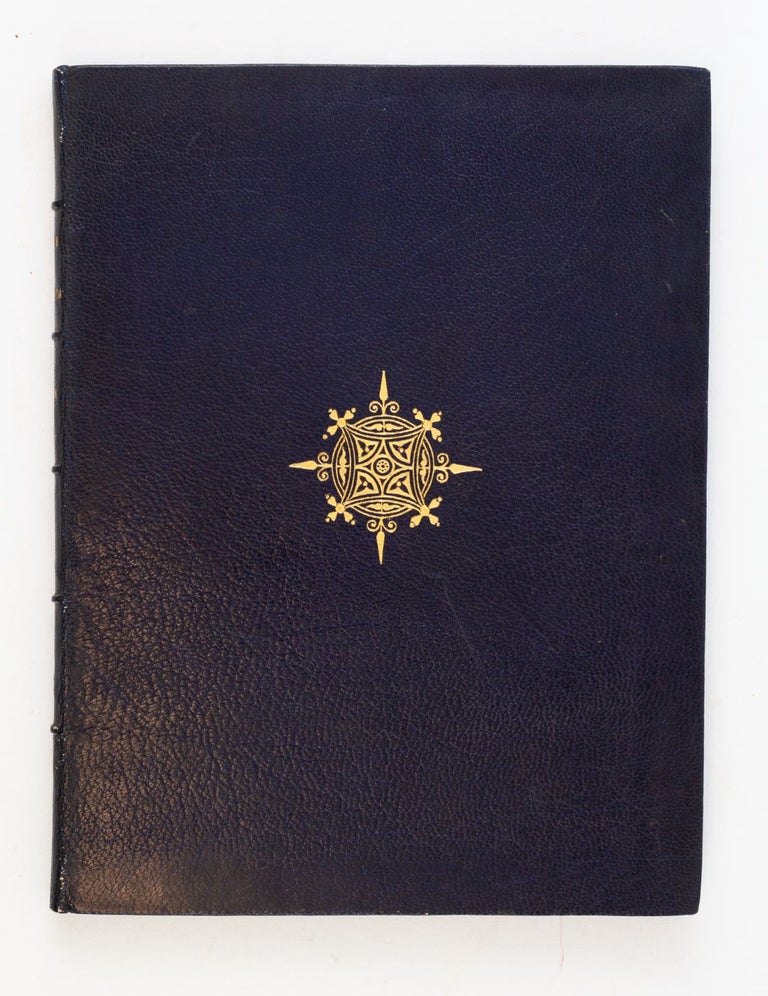
Attractive 19th or early 20th century blue morocco, circular gilt centerpiece on each board, raised bands, gilt titling, gilt turn-ins, all edges gilt. Front pastedown with morocco ex-libris of W. A. Foyle, Beeleigh Abbey. Macdonald 84c; Wing D-2391; ESTC R4117. ◆A light diagonal dampstain at upper corner (covering a little less than a quarter of the page, sometimes quite faint, never serious), title and final page a bit soiled, other minor imperfections internally, but still a very pleasing copy, the lustrous binding with almost no wear, and the text with none of the major problems normally seen in copies of Restoration plays.
From a distinguished collection, this is a copy of a work of value not only as an adaptation of Shakespeare, but also as an early critical examination of the Bard's language, written by the most famous playwright of the Restoration period. Originally written around 1602 and first published in 1609, "Troilus and Cressida" has long been considered one of Shakespeare's more "problematic" plays. Seeking to update and improve the work to appeal to modern audiences, Dryden revised the language, deepened certain themes, and leaned into the tragedy of the play, with Cressida falsely accused of being unfaithful to Troilus and killing herself as punishment. (In Shakespeare's version, Cressida, in fact, does betray Troilus, but lives.) Of equal interest to the play itself is the prefatory essay, "The Grounds of Criticism in Tragedy," in which Dryden offers a critique of Shakespeare's language and lays out his reasons for revision: "because the Play was Shakespear's, and that there appear'd in some places of it, the admirable Genius of the Author; I undertook to remove that heap of Rubbish under which many excellent thoughts lay wholly bury'd." Dryden (1631-1700) was deemed "the father of English criticism" by Johnson, and Day notes that this essay is also "the first significant and detailed analysis in English of Aristotle's concept of tragedy." Our finely bound copy comes from the library of W. A. Foyle, co-founder with his brother of the famous Foyle's Bookshop in Charing Cross Road. The three large Foyle sales at Christie's held in 2000 were a bibliophilic highlight of the new century, and the sum of $19 million for which William Foyle's personal library sold in July set a record for private European collections. (ST12901g)
Price: $950.00